

Do you think you can handle divorce without spending a lot on lawyers? Filing for divorce in Connecticut without a lawyer might seem hard. But, it’s more doable than you might think.
The standard divorce process in Connecticut lets you represent yourself. You need to know how to go through the expedited nonadversarial divorce. This means you have to prepare well and understand the legal steps.
To succeed on your own, you must know who can file, fill out forms right, meet deadlines, and follow court rules. It’s tough, but many people in Connecticut do it well with the right info and prep.
Key Takeaways
- Connecticut allows self-representation in divorce proceedings
- Understanding legal forms and deadlines is key
- Eligibility requirements change based on divorce type
- Even when doing it yourself, getting legal advice can help
- Good prep can lower legal costs
Understanding Divorce in Connecticut
Getting a divorce in Connecticut means knowing the legal steps and choices. The state has different ways for couples to end their marriage. Each way has its own rules and needs.
What Is a Divorce?
A divorce, or dissolution in Connecticut, ends a marriage with court approval. Couples in Connecticut can choose from various divorce paths. This depends on their situation and how much they agree.
Types of Divorce Available in Connecticut
Connecticut has three main divorce options:
- Nonadversarial divorce: Fastest for couples meeting 10 criteria under C.G.S. § 46b-44a
- Uncontested divorce: For couples agreeing on everything but not meeting nonadversarial criteria
- Contested divorce: Needs court help to solve disagreements
The state is a no-fault divorce place. “Irretrievable breakdown” is the main reason for divorce. But, fault reasons under C.G.S. § 46b-40(c) are also there, though less used.
Key Terms You Should Know
Knowing legal words helps you understand the divorce process better:
- Plaintiff: The one who starts the divorce
- Defendant: The one who gets the divorce papers
- Return Date: Begins the 90-day countdown for divorce
- Case Management Date: First chance for finalizing the divorce
- Automatic Orders: Rules that must be followed during the divorce
Each divorce type has its own challenges and rules. It’s important to know the legal details before moving forward.
Preparing for Your Divorce
Going through a divorce needs careful planning and getting things in order. Before you start the legal steps, knowing what to do first can make things easier. This helps you move through Connecticut’s divorce process smoothly.
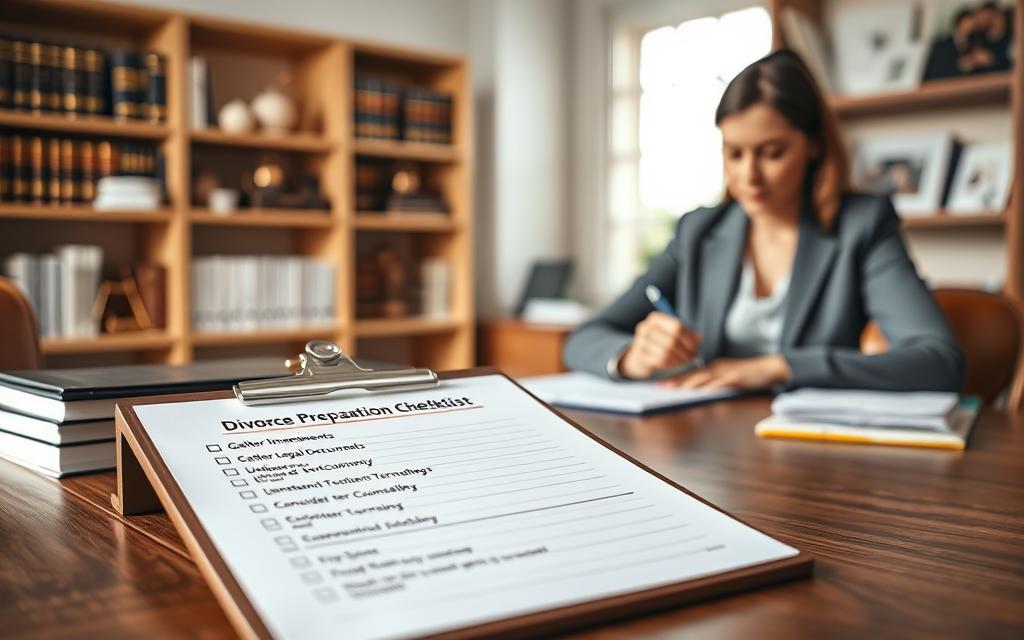
Gathering Necessary Documents
Gathering all your financial papers is key. You’ll need to gather lots of personal and shared financial documents.
- Marriage certificate
- Bank statements from last 12 months
- Tax returns for past three years
- Pay stubs and income verification
- Retirement account statements
- Property deeds and mortgage information
- Vehicle titles
- Credit card and loan statements
- Insurance policies
Understanding Grounds for Divorce
Connecticut allows both fault and no-fault divorces. Knowing the difference can help you plan better.
| Fault Grounds | No-Fault Grounds |
|---|---|
| Adultery | Irretrievable breakdown |
| Wilful desertion | Irreconcilable differences |
| Cruel treatment | Separation for at least 18 months |
Financial Considerations Before Filing
Getting your finances in order is very important. You need to know the rules about living in Connecticut and fill out the right financial forms.
- Residency requirement: At least one spouse must have lived in Connecticut for 12 months
- Complete Financial Affidavit Form JD-FM-6 (short or long version)
- Know the $80,000 asset limit for nonadversarial divorce
- Identify all marital property and debts for equitable distribution
Filing the Divorce Complaint
Getting a divorce in Connecticut needs careful steps. You must fill out important papers and send them to the Superior Court.
How to Complete the Forms
It’s important to fill out divorce forms correctly. You will need a few main documents:
- Summons (Form JD-FM-3)
- Complaint (Form JD-FM-159)
- Notice of Automatic Court Orders (Form JD-FM-158)
- Affidavit Concerning Children (Form JD-FM-164) if children are involved
The Complaint asks for specific details. This includes:
- Where you live
- Why you want a divorce
- Info about the kids
- What court orders you want
Filing Options: In-person vs. Online
There are two ways to file your divorce papers in Connecticut:
| Filing Method | Pros | Considerations |
|---|---|---|
| In-Person Filing | Help from the court clerk | Must go to the courthouse |
| Online Filing | Easy to do from home | Needs access to e-filing system |
Paying the Filing Fee
You must pay a fee to file your divorce papers. Financial Affidavits (Form JD-FM-6-SHORT) can help if you can’t pay.
For simple divorces, use the Joint Petition for Nonadversarial Divorce (Form JD-FM-242) and Agreement for Nonadversarial Divorce (Form JD-FM-243). This makes things easier.
Serving Your Spouse
Serving divorce papers is a key step in the divorce process. It tells your spouse about the divorce and lets them respond. This step is important for both sides’ rights and moves the divorce along.

Importance of Proper Service
In Connecticut, serving divorce papers the right way is a must. If you don’t, it can:
- Slow down your divorce
- Make your first filing not count
- Make you start over
- Cost you more money
Methods for Serving Your Spouse
There are many ways to legally serve divorce papers in Connecticut:
- Personal Service: A server or sheriff gives the papers directly
- Certified Mail with Return Receipt
- Cooperative Hand Delivery with Signed Acknowledgment
- Service through Court-Approved Alternative Methods
| Service Method | Cost | Effectiveness |
|---|---|---|
| Personal Service | $50-$150 | Highest |
| Certified Mail | $10-$25 | Moderate |
| Cooperative Delivery | Free | Variable |
What to Do if Your Spouse Cannot Be Served
If usual ways don’t work, Connecticut courts have other options. You might:
- Ask for service by posting
- File for service by publication
- Get court permission for other ways to notify
Always check with local courts or a lawyer to follow Connecticut’s rules.
Responding to the Divorce Complaint
Going through the divorce response in Connecticut needs careful steps and meeting deadlines. When you get a divorce complaint, you play a big role in what happens next.

Understanding the Response Process
After getting a divorce complaint, you must act fast. Important steps include:
- File an Appearance as soon as possible after being served
- Submit responsive pleadings before the case management date
- Prepare detailed documentation supporting your position
Timeline for Responding
Connecticut courts have rules for divorce responses. You should watch these important deadlines:
| Action | Typical Timeframe |
|---|---|
| File Appearance | Within 30 days of service |
| Submit Responsive Pleadings | Before case management date |
| Initial Case Management Date | Typically 90 days after filing |
What Happens After You Respond
After filing an Appearance, both sides have a 90-day waiting period. You will:
- Negotiate divorce terms
- Exchange financial affidavits
- Work toward a settlement agreement
- Prepare for hearing (uncontested or contested)
If you don’t respond on time, the case might go on without you. Or, you could lose by default. It’s important to stay involved to protect your rights.
Temporary Orders and Child Custody
During divorce in Connecticut, temporary orders are very important. They help protect parents and kids. These orders give quick answers on important family matters while the divorce is happening.
Temporary orders set up basic rules for child care, money support, and where kids live. They make sure families stay stable and know what to expect during a tough time.
How to Request Temporary Orders
To ask for temporary orders in Connecticut, you need to:
- File a motion with the local family court
- Give detailed papers to support your request
- Show why you need the court’s help right away
- Pay the fees to file
Child Custody Considerations
Connecticut courts focus on what’s best for the child when deciding custody. They look at:
- The child’s bond with each parent
- How well each parent can take care of the child
- Where the child currently lives
- How custody might affect the child’s school and feelings
Types of Custody Arrangements in CT
Connecticut has different custody plans to keep kids safe:
- Legal Custody: Who makes big decisions for the child
- Physical Custody: Where the child lives most of the time
- Joint Custody: Both parents share in raising the child
- Sole Custody: One parent has most of the decision-making and living duties
Knowing these options helps parents plan the best for their kids’ future.
Attending Court Hearings
Going to court for a divorce can be scary. Knowing what to expect helps you feel less worried. Each step needs your full attention and a professional attitude.
What to Expect in Court
In court, you’ll see a clear legal process. The judge will look at important papers like:
- Executed separation agreement
- Re-certified Financial Affidavits (JD-FM-6-Long or JD-FM-6-Short)
- Advisement of Rights Form (JD-FM-71)
- Dissolution of Marriage Report (JD-FM-181)
Preparing Your Case
Getting ready well is important for a good hearing. If kids are involved, you’ll need more papers like:
- Parenting Responsibility Plan
- Affidavit Concerning Children
- Child Support Guidelines worksheet
At the hearing, everyone will promise to tell the truth. The judge will ask questions to check if everything is right.
Tips for Presenting Yourself in Court
Looking and acting professional matters a lot. Here are some tips:
- Dress in business or business casual clothes
- Get there early to find the right room
- Bring extra copies of your papers
- Talk clearly and directly to the judge
- Answer questions truthfully and briefly
The judge will check all papers to make sure everything is fair. For easy divorces, you might not need a hearing. This could happen about 35 days after you file.
Negotiating Settlements
Divorce settlements are a big step in ending a marriage. Couples must divide their assets, debts, and decide on support. They need to plan well and know the laws of Connecticut.
- Division of all marital property and debts
- Alimony/spousal support considerations
- Child custody and parenting schedules
- Child support calculations
- Division of children’s expenses
The Importance of Negotiation
In Connecticut, property is divided fairly, not always equally. Spouses look at how long they were married, what they brought to the marriage, and their future needs.
Mediation vs. Litigation
Couples can choose two ways to settle their divorce:
| Mediation | Litigation |
|---|---|
| Voluntary process | Court-mandated proceedings |
| Less expensive | More costly |
| Collaborative approach | Adversarial process |
Drafting a Settlement Agreement
A good settlement agreement covers all critical aspects of ending a marriage. It should include details on alimony, property, child support, and parenting. Remember, if alimony isn’t talked about during divorce, you can’t ask for it later.
Getting help from a lawyer is important. They make sure your agreement is fair and can be enforced.
Finalizing Your Divorce
Getting to the end of your divorce needs careful steps. The court checks your separation agreement. They look to see if it’s fair and complete.
Often, if it’s okay, the divorce decree can be finalized in about 35 days. This is without a big hearing.
At the final hearing, the judge will ask important questions. They want to make sure you both agree and meet the requirements. The judge will look at all the papers to make sure everything is right.
After it’s all over, you need to take action fast. Get many certified copies of your divorce decree. These are important for changing your legal and financial stuff.
You’ll need to move property, split money, and change who gets things after you’re gone. Also, update your ID and other important documents.
Remember, your agreement is now a court order. Breaking it can lead to big trouble. If your life changes a lot, you might need to ask for changes in your divorce agreement. For help with these changes, look into legal help in Connecticut.