

Nearly 90% of legal agreements now have binding arbitration clauses. This changes how we solve disputes in the U.S. A binding arbitration agreement is a strong legal tool. It lets parties settle conflicts outside of court, which is faster and cheaper than going to court.
It’s important to know about binding arbitration agreements for businesses and people. These legal terms help solve disagreements without long court battles.
Binding arbitration agreements are key for solving disputes. They let parties get a final decision from a neutral third-party. This is different from court battles, as it’s quicker and easier.
Key Takeaways
- Binding arbitration agreements provide a legally enforceable method of dispute resolution
- Approximately 27% of U.S. employers utilize arbitration agreements
- Arbitration can reduce litigation costs by up to 50%
- These agreements typically resolve disputes within 6 months
- The Federal Arbitration Act supports both pre-dispute and post-dispute arbitration agreements
Understanding Binding Arbitration Agreements
Binding arbitration agreements are key in solving disputes outside of courts. They offer a way to settle conflicts without the long, costly court battles. This method is a structured way to solve problems.
Definition of Binding Arbitration
A binding arbitration agreement is a contract. It says parties will solve disputes through private arbitration. An impartial arbitrator listens to both sides and makes a decision that both must follow.
Purpose of Binding Arbitration Agreements
- Provide a faster dispute resolution method
- Reduce legal costs for involved parties
- Maintain privacy during conflict resolution
- Create a more flexible legal framework
The contract arbitration clause is key. It sets clear rules for solving disputes. Companies and people use it to avoid long legal fights.
Key Characteristics
An enforceable arbitration contract has important parts:
- Clear language defining the arbitration process
- Mutual agreement from all parties
- Predetermined arbitration rules
- Selection criteria for neutral arbitrators
Knowing about arbitration agreements helps make smart choices. It shows the good and bad sides of using this method.
Importance of Binding Arbitration Agreements
Binding arbitration agreements are key in today’s legal and business world. They offer both benefits and drawbacks. It’s important to know how they work.
These agreements are a smart choice instead of going to court. They help solve problems quickly and efficiently.
Advantages for Parties Involved
Arbitration agreements have many good points:
- Cost Efficiency: They cost much less than going to court
- Faster Resolution: They solve problems faster than court cases
- Confidentiality: They keep business secrets safe
- Expert Decision-Making: They use experts who know the field well
Disadvantages to Consider
Even with many benefits, there are downsides to think about:
- Limited appeal options
- Potential arbitrator bias
- Reduced procedural protections
- Possible unequal bargaining power
Those dealing with arbitration agreements need to do their homework. They must understand the fine details of these contracts.
Legal Framework Governing Arbitration Agreements
The laws about arbitration agreements in the United States are complex. It’s important to know the legal framework if you’re thinking about arbitration. Arbitration can only work if it’s enforceable, and that depends on laws.
The Federal Arbitration Act (FAA) is at the heart of arbitration agreements. It sets a national policy for solving disputes outside of court. This law helps make arbitration rules the same everywhere.
Federal Arbitration Act Fundamentals
The FAA is key in choosing between arbitration and court. It:
- Makes sure arbitration agreements are followed the same way everywhere
- Protects the rights of those who choose arbitration
- Helps make arbitration decisions official
State Laws and Variations
Even with the FAA, states can have their own rules. These differences can change how arbitration agreements are seen and followed in different places.
Some states have special rules for arbitration. This makes the legal world more complex. People need to be careful when dealing with these rules.
Those involved in arbitration must know both federal and state laws. This helps protect everyone and solve disputes well.
How Binding Arbitration Works
Binding arbitration is a way to solve disputes outside of court. It uses business arbitration contracts to make things easier and private. This method is faster than going to court.
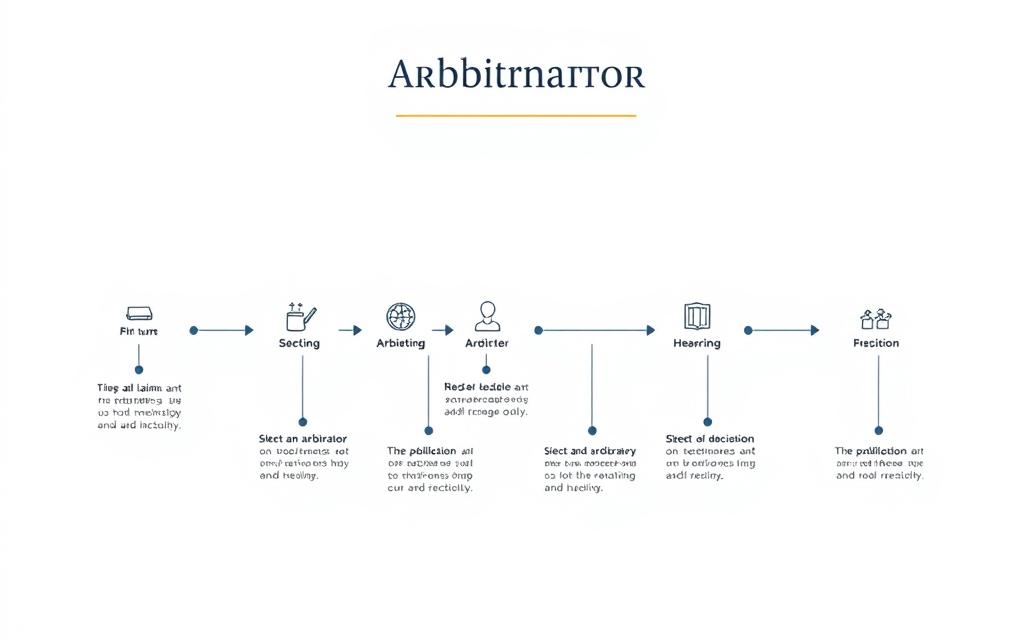
Knowing how arbitration works helps people and companies deal with legal issues better. Private arbitration agreements let people solve problems in a flexible way, unlike court.
The Arbitration Process Step by Step
- Initial dispute identification
- Selection of neutral arbitrator
- Formal hearing scheduling
- Evidence presentation
- Arbitrator’s binding decision
Role of the Arbitrator
An arbitrator is an impartial third-party decision-maker. In employee arbitration agreements, they look at evidence, listen to both sides, and make a final decision. Their main jobs are:
- Maintaining procedural fairness
- Analyzing submitted documentation
- Rendering an objective judgment
Arbitration vs. Mediation: Key Differences
Arbitration and mediation are different ways to solve disputes. An arbitration dispute guide shows that arbitration makes a final decision. Mediation tries to help people agree without a final decision.
| Arbitration | Mediation |
|---|---|
| Binding decision | Non-binding recommendation |
| Formal hearing process | Informal negotiation |
| Legally enforceable outcome | Voluntary agreement |
Choosing the right way to solve a dispute depends on the situation, contracts, and what you want to happen.
Enforceability of Binding Arbitration Agreements
Understanding binding arbitration is key. It shows how courts check these agreements. This is important for legal disputes.
Binding Legal Disputes depend on the agreement’s details. Courts look at many things to see if it’s legal.
Key Factors of Enforceability
- Mutual consent of all parties involved
- Clear and unambiguous language
- Absence of unconscionable terms
- Equitable treatment of both parties
Common Challenges in Arbitration Agreements
Getting help with arbitration agreements is important. Some things can make the agreement not valid:
| Challenge Type | Potential Impact |
|---|---|
| Unequal Bargaining Power | May render agreement unenforceable |
| Lack of Transparency | Can lead to judicial scrutiny |
| Overly Restrictive Terms | Might invalidate entire agreement |
Arbitration Law Basics say courts look for fairness. The arbitrator’s decision typically remains final. So, making the agreement clear is very important.
Agreements need to be made carefully. They must follow the law and protect both sides.
Types of Arbitration Agreements
Arbitration agreements are key in solving disputes in many areas. Knowing the types helps people deal with legal issues better. They are strong tools for solving problems outside of courts.
There are many kinds of arbitration agreements. Each one is made for different needs. This makes it easier to handle problems in various fields.
Pre-Dispute vs. Post-Dispute Agreements
Arbitration clauses come in two main types:
- Pre-Dispute Agreements: Signed before any problem starts, often in first legal papers
- Post-Dispute Agreements: Made after a problem has happened
Consumer Arbitration Agreements
Many consumer deals have arbitration clauses. They say how to solve problems between buyers and sellers. This helps avoid long court fights.
Employment Arbitration Agreements
Many jobs have arbitration agreements in contracts. They help solve work problems in a quick way. This is better than going to court.
Arbitration agreements show how complex solving disputes can be. Experts need to know each type well. This helps manage problems better.
The Impact on Litigation
Binding arbitration changes how we solve legal problems in the United States. It moves disputes from courts to private arbitration. This changes how we handle legal issues.
Arbitration is different from going to court. When people agree to arbitration, they give up their right to go to court.
How Binding Arbitration Reshapes Legal Disputes
Binding arbitration brings new challenges and chances to solve legal problems:
- Reduces court system backlog
- Provides faster dispute resolution
- Limits public exposure of legal conflicts
- Creates more predictable outcomes
Limitations on Legal Appeals
The binding agreement limits appeals a lot. Arbitration decisions are final and legally enforceable. There are few reasons to challenge them.
| Litigation Characteristic | Arbitration Characteristic |
|---|---|
| Multiple Appeal Levels | Limited Appeal Options |
| Public Court Records | Private Proceedings |
| Lengthy Legal Process | Streamlined Resolution |
Knowing these points helps people decide about arbitration. They see both the good and bad sides of this way to solve disputes.
Crafting a Binding Arbitration Agreement
Creating a strong arbitration agreement needs careful planning. Legal experts and businesses must be precise. This ensures protection and clear ways to solve disputes.
When making arbitration agreements, many important things must be thought about. This makes the agreement effective and legal.
Key Components of Arbitration Agreements
- Clear scope of disputes covered
- Specific arbitration rules and procedures
- Mechanism for selecting arbitrators
- Defined venue and location for hearings
- Cost allocation and fee structures
Drafting Effective Agreements
Good arbitration agreements need careful words and planning. Precision in contractual arbitration documentation prevents future conflicts. It also makes solving disputes clear.
- Use clear and specific language
- Define dispute resolution clearly
- Make sure it’s fair for everyone
- Include detailed confidentiality rules
- Get a lawyer to check it
Arbitration needs careful thought and detailed plans. By using these steps, companies can make strong agreements. These agreements protect their interests and offer a clear way to solve problems.
Common Myths About Binding Arbitration
Binding arbitration agreements often get wrapped in misconceptions. These can cloud people’s understanding of this legal mechanism. Many individuals approach legal arbitration terms with preconceived notions. These may not reflect the actual realities of the process.
Misunderstandings about what is a binding arbitration agreement can prevent parties from recognizing its benefits. These myths can create unnecessary anxiety and skepticism about the arbitration process.
Debunking Widespread Misconceptions
Several common myths persist about binding arbitration agreements:
- Arbitration always favors businesses – While concerns exist, neutral arbitrators are bound by ethical guidelines
- Arbitration is always cheaper than litigation – Costs can vary depending on the complexity of the case
- Arbitration decisions can be easily overturned – In reality, arbitration awards are typically final and difficult to challenge
Understanding the Realities
What is binding arbitration truly about? It’s a structured alternative dispute resolution method. It’s designed to provide a fair, efficient way to resolve conflicts outside traditional court systems. The legal arbitration terms are carefully crafted to ensure neutrality and provide a balanced approach to dispute resolution.
Professional arbitrators follow strict ethical standards. They ensure that decisions are made impartially. The perception of bias is often more myth than reality when examining the actual practices of binding arbitration agreements.
Binding Arbitration in Different Industries
Binding arbitration is key in many fields. It helps solve problems in a fair way. Knowing how Binding Arbitration Explained works in different areas shows its value.

More companies use arbitration to avoid long legal fights. The rules of arbitration change a bit in each field. This is because each industry faces its own challenges.
Healthcare Sector Arbitration
In healthcare, Contract Arbitration Clause helps solve big problems. Doctors and hospitals use it to:
- Settle claims from patients
- Deal with lawsuits about mistakes
- Keep their good names safe
Consumer Goods and Services
Many deals with customers include Enforceable Arbitration Contract parts. These rules help both sides by:
- Making it easier to solve problems
- Lowering the cost of lawsuits
- Keeping things private
Employment and Labor Relations
Workplaces use binding arbitration to fix issues. It’s used for:
- Dealing with unfair firing cases
- Handling complaints of unfair treatment
- Figuring out pay disputes
Arbitration offers a quick, fair way to solve problems in many areas.
Case Studies in Binding Arbitration
Binding arbitration has changed how we solve disputes in many fields. To understand it, we look at real-life examples. These show how arbitration law works in action.
Legal cases are key in shaping how we see arbitration contracts. These examples show the complex ways arbitration works in different situations.
Landmark Court Decisions Impacting Arbitration
Many important court cases have changed arbitration:
- AT&T Mobility v. Concepcion (2011): Supreme Court decision strengthening arbitration agreements
- Epic Systems Corp. v. Lewis (2018): Validated employment arbitration clauses
- DIRECTV, Inc. v. Imburgia (2015): Reinforced federal arbitration standards
Lessons from Past Arbitration Experiences
Important lessons from past arbitrations include:
- Clear contract language prevents future disputes
- Neutral arbitrators ensure fair proceedings
- Comprehensive agreement drafting minimizes legal challenges
These case studies show why making good arbitration agreements is key. They protect everyone’s interests and help solve disputes quickly.
Alternatives to Binding Arbitration
There are many ways to solve disputes, not just binding arbitration. Knowing these options helps people and businesses choose the best one for their problems.
Legal agreement arbitration offers different ways to solve disputes. Each method has its own special features. They might work better than traditional binding arbitration for some situations.
Non-Binding Arbitration: A Flexible Option
Non-binding arbitration is very different from binding arbitration. In this type, you can choose to follow the arbitrator’s advice. It’s less formal and you can go to court if you don’t agree.
- Voluntary acceptance of the arbitrator’s recommendation
- Less formal than binding arbitration
- Opportunity to pursue litigation if unsatisfied
Mediation: A Collaborative Approach
Mediation is a way to find a middle ground between arbitration and litigation. A neutral third party helps the sides talk and find a solution. Unlike arbitration, mediators don’t make decisions. They help the parties agree.
In mediation, you don’t need to worry about arbitration enforceability. It’s all about working together to solve problems. This way, you can keep your relationship strong, unlike in more argumentative methods.
Comparing Resolution Strategies
An arbitration clause example shows the differences between these methods. Binding arbitration gives a clear answer. But non-binding arbitration and mediation offer more flexible ways to solve disputes.
- Binding Arbitration: Legally enforceable decision
- Non-Binding Arbitration: Recommended solution with optional acceptance
- Mediation: Facilitated negotiation with mutual agreement
Choosing the right way to solve disputes depends on many things. You need to think about your situation, what might happen, and the future.
The Future of Binding Arbitration Agreements
The world of Business Arbitration Contracts is changing fast. New tech and legal views are making Private Arbitration Agreements better. These changes are happening in many fields.
New tech is making the Arbitration Dispute Guide better. It’s now easier to solve problems. Here are some big changes:
- Virtual arbitration platforms
- AI-assisted dispute resolution tools
- Enhanced data privacy protections
- Streamlined communication channels
Legal changes are also coming. They are looking at Employee Arbitration Agreements. The goal is to make sure everything is fair and clear.
Technological Innovation in Arbitration
AI and machine learning are changing how we solve disputes. They bring:
- Faster conflict resolution
- More objective decision-making
- Reduced administrative costs
- Improved accessibility
The future of arbitration will likely focus on digital tools, clear rules, and flexible ways to solve problems.
Potential Legal Reforms
New laws might make arbitration agreements stricter. They want to protect people’s rights and make sure things are fair. Lawmakers are trying to find a balance.
Frequently Asked Questions
Understanding binding legal disputes can be tough. This section answers common questions about arbitration. It also helps with arbitration agreements.
What Happens If One Party Refuses to Arbitrate?
If a party doesn’t want to arbitrate, there are a few things that can happen. The Arbitration Law Basics explain what can be done legally:
- Court enforcement of the arbitration agreement
- Potential financial penalties
- Possible default judgment against the non-participating party
Courts usually support arbitration agreements. They can make someone participate through the law. The Federal Arbitration Act helps enforce these agreements.
Can Binding Arbitration Agreements Be Revised?
Changing arbitration agreements needs careful thought. Certain situations might let you modify or challenge:
| Grounds for Revision | Potential Action |
|---|---|
| Unconscionable terms | Partial or complete invalidation |
| Procedural unfairness | Court review and possible changes |
| Mutual agreement between parties | Negotiated changes |
It’s wise to look over arbitration agreements before signing. This can avoid problems in the future.
Conclusion: Making Informed Choices
Understanding binding arbitration agreements is key. It helps both people and businesses find legal solutions. Knowing what a binding agreement means is very important.
Binding arbitration is a smart way to solve problems outside of court. The arbitration clause is a strong tool. It can change how disputes are handled.
Evaluating the Pros and Cons
When looking at arbitration agreements, think carefully:
- Is it cheaper to solve disputes this way?
- Does it keep things private?
- Are there limits on what you can do legally?
- Is it faster to solve problems this way?
Final Thoughts on Binding Arbitration Agreements
Deciding on a binding arbitration agreement needs careful thought. Arbitration clauses can offer big benefits. But they’re not good for every situation.
Things to consider include:
- Do you need it for your industry?
- Will it limit your legal options later?
- Does it fit with your company’s goals?
- What are the long-term effects of using this method?
Knowing the details of arbitration agreements helps. It lets people and companies make smart choices. They can protect their interests and solve problems efficiently.
Resources for Further Information
Understanding alternative dispute resolution can be tough. Legal experts and those new to arbitration need good resources. There are many educational materials and expert tips out there.
Books and journals give deep insights into binding agreements. The American Arbitration Association has great guides and research. Lawyers and scholars can dive into Harvard Law Review and the Journal of Dispute Resolution for the latest on arbitration.
Online sites like the National Institute for Dispute Resolution and the American Bar Association are very helpful. They have the latest on laws and court decisions. You can also find webinars, research papers, and networking chances to learn more.
Government sites like the U.S. Department of Justice and Federal Mediation and Conciliation Service have free info. They explain arbitration laws well. You can find reports, stats, and policy guidelines on dispute resolution in different fields.
Recommended Readings
Some top books are “Arbitration in Practice” by Stephen K. Huber, “Resolving Disputes” by Frank Sander, and “Understanding Alternative Dispute Resolution” by Michael Moffitt. They give a full view of arbitration and legal rules.
Useful Legal Websites and Organizations
Experts can use resources from the American Arbitration Association, JAMS Mediation, and the International Chamber of Commerce. These groups offer lots of research, training, and advice on solving disputes.