

What if a life sentence doesn’t always mean life behind bars? Texas law challenges this assumption with parole practices that diverge sharply from federal guidelines. While federal prisoners face near-zero chances of release after 1987 reforms, the Lone Star State maintains distinct eligibility rules based on offense severity, age, and conduct.
State statutes categorize punishments into determinate and indeterminate terms. Determinate sentences specify minimum prison time before parole review, while indeterminate terms leave release decisions to the parole board. Capital crimes like murder trigger harsher thresholds—defendants aged 18+ convicted of capital murder face life without parole, whereas younger offenders serve 40 calendar years before eligibility.
Texas also calculates good conduct time to reduce mandatory confinement periods. However, certain violent offenses exclude this benefit. Recent cases, like Francisco Oropeza’s guilty plea for a 2023 mass shooting, demonstrate how prosecutors leverage life-without-parole deals to bypass death penalty trials.
This article clarifies Texas’s complex sentencing framework, contrasts state and federal policies, and examines real-world applications through legal precedents. You’ll learn how parole boards evaluate release requests and why understanding terms like “time served” or “without possibility of parole” shapes public perceptions of justice.
Key Takeaways
- Parole eligibility in Texas depends on the defendant’s age during the crime and offense classification.
- Capital murder convictions for adults (18+) result in life imprisonment without parole.
- Federal sentencing eliminates parole, unlike Texas’s case-by-case review system.
- Determinate sentences have fixed parole dates; indeterminate terms rely on board discretion.
- The parole board considers conduct credits and rehabilitation progress during reviews.
- Real cases highlight plea bargains avoiding death penalties through life-without-parole agreements.
Overview of Texas Life Sentencing Framework
The Lone Star State employs two distinct sentencing models that shape imprisonment outcomes. Determinate terms specify fixed minimum prison periods, while indeterminate sentences leave release decisions to evaluators. This framework creates stark differences in parole eligibility across cases.
Determinate vs. Indeterminate Life Sentences
Determinate punishments mandate exact confinement durations before parole review. For example, a 30-year term requires serving 15 years (50%) for violent crimes or 7.5 years (25%) for nonviolent offenses. Indeterminate sentences like “life without parole” eliminate release possibilities entirely.
| Sentence Type | Parole Eligibility | Example |
|---|---|---|
| Determinate | After serving 25-50% of term | 40-year sentence |
| Indeterminate | No parole option | Life without parole |
Classification of Felonies and Sentence Implications
Texas organizes crimes into five felony tiers with escalating penalties:
| Felony Class | Punishment Range | Parole Eligibility |
|---|---|---|
| Capital | Death or life without parole | None for life terms |
| First-Degree | 5-99 years | After 25% served |
| Second-Degree | 2-20 years | After 25% served |
| Third-Degree | 2-10 years | After 25% served |
| State Jail | 180 days-2 years | Not applicable |
Capital offenses like premeditated murder of police officers carry the harshest penalties. State jail felonies for crimes like minor theft exclude parole entirely, requiring full term completion.
Understanding How Long Is a Life Sentence in Texas
Texas distinguishes between absolute confinement and conditional release scenarios. Those convicted under “life without parole” provisions face permanent imprisonment, while others may reduce their confinement through structured programs.

Life Without Parole Explained
A life without parole conviction means exactly what it states: no release mechanism exists. Since 2005, this applies to adults convicted of capital murder. However, historical cases like Yolanda Saldívar’s 1995 murder conviction demonstrate that pre-2005 sentences sometimes retain parole options after decades served.
Parole Eligibility and Good Conduct Time
Three factors determine release potential:
- Crime severity and minimum service requirements
- Work program participation
- Behavioral records affecting conduct credits
Inmates earn up to 30 days monthly through good behavior and rehabilitation efforts. Violent offenders typically serve 50% of their term before eligibility review. The Texas Board of Pardons and Paroles evaluates each request through majority vote, considering public safety risks and rehabilitation progress.
| System | Parole Availability | Review Frequency |
|---|---|---|
| Texas | Case-by-case basis | Annual or multi-year intervals |
| Federal | No parole since 1987 | Not applicable |
This structured approach creates measurable pathways for some prisoners while maintaining strict confinement for others. Legal definitions establish boundaries, but practical execution determines actual outcomes.
Legal Implications, Case Examples, and Notable Precedents
Texas courts have shaped modern sentencing through landmark rulings and evolving interpretations. Legal battles over life without parole provisions reveal how judicial decisions interact with legislative intent.
Capital Murder and the Option of Life Without Parole
Since September 1, 2005, adults convicted of capital murder automatically receive permanent confinement. This replaced previous laws allowing parole after 40 years. The shift followed public demand for stricter punishments after high-profile crimes.
In Schick v. Reed (1974), the U.S. Supreme Court upheld modified sentences through executive clemency. Though a federal case, it influenced Texas courts to recognize gubernatorial powers in altering punishments post-conviction.
Influential Court Decisions and Legal Challenges
Texas courts frequently reference these principles when reviewing sentences:
- Judges must consider mitigating factors like age or mental state
- Appeals based on cruel/unusual punishment claims
- Retroactive application of sentencing reforms
| Case | Impact | Outcome |
|---|---|---|
| 2005 Law Change | Eliminated parole for adult capital murder | Mandatory LWOP |
| Ex parte Chavez (2014) | Clarified retroactivity rules | Pre-2005 cases retain parole options |
| Moore v. Texas (2017) | Barred executing intellectually disabled | Increased LWOP sentences |
The parole board retains final authority, even when prisoners meet eligibility criteria. Recent reforms require annual reviews for certain cases, though violent offenders face stricter scrutiny.
Statistical Insights and Parole Trends in Texas
Statistical patterns reveal evolving approaches to long-term confinement. Texas maintains parole eligibility for 87% of life sentence cases, contrasting sharply with federal prisons where parole was abolished in 1987. A 2024 University of Texas study found 21% of state prisoners serving life without parole terms, compared to 41% in federal facilities.
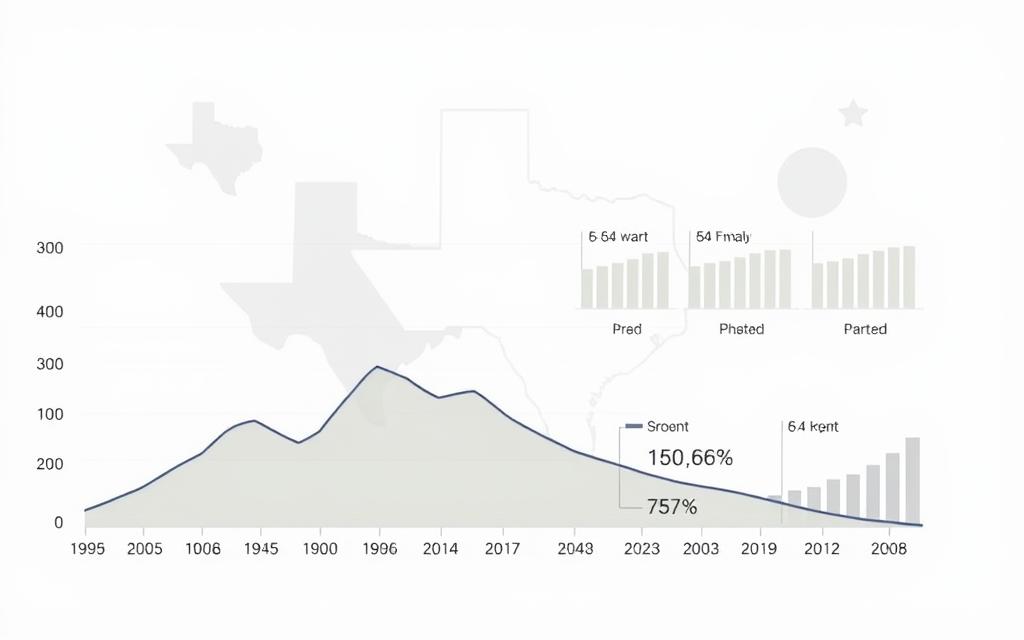
Federal vs. State Sentencing Practices
Federal courts mandate full-term service for violent crimes under truth-in-sentencing laws. Texas allows parole reviews after serving 25-50% of sentences, depending on conduct and offense class. This creates divergent outcomes:
| System | Parole Availability | Avg. Time Served |
|---|---|---|
| Federal | 0% (since 1987) | 100% of term |
| Texas | 63% eligible annually | 58% of term |
Legislative Changes and Parole Data Analysis
Three key reforms shaped current practices:
- 1995 Senate Bill 190: Expanded life without parole to non-capital offenses
- 2005 Capital Murder Act: Removed parole options for adult offenders
- 2021 House Bill 1276: Required parole boards to consider rehabilitation metrics
Recidivism rates for paroled prisoners dropped 14% since 2010, influencing recent policy shifts. However, only 18% of eligible violent offenders gain release annually. Demographic data shows 67% of those denied parole cite insufficient rehabilitation progress.
| Year | Parole Grant Rate | Avg. Review Interval |
|---|---|---|
| 2010 | 32% | 3.1 years |
| 2023 | 41% | 2.4 years |
Conclusion
Texas’s sentencing framework balances rigid penalties with conditional release pathways. Determinate terms offer predictable timelines, while indeterminate punishments hinge on parole board evaluations. These distinctions create vastly different outcomes for defendants facing capital crimes versus nonviolent offenses.
Parole eligibility remains central to understanding confinement durations. Adults convicted of capital murder since 2005 face permanent imprisonment, whereas others may reduce terms through rehabilitation. Judicial decisions and legislative reforms—like 2021’s rehabilitation-focused updates—continually reshape release criteria.
Federal systems contrast sharply, as seen in parole availability and mandatory minimums. Texas juries weigh statutory guidelines under Article 37.07, considering conduct credits and defendant history during sentencing phases. Such procedural nuances underscore why legal professionals must track evolving case law and statistical trends.
As debates over criminal justice reform persist, Texas’s approach highlights tensions between punishment and second chances. Clear comprehension of these mechanisms remains vital for fair application and informed policy decisions.